Huawei's MatePad Pro Max Becomes Thinnest Tablet Globally While Packing a HarmonyOS PC

TL;DR · AI Summary
Huawei's MatePad Pro Max sets a new global record at 4.7mm thickness for 13-inch tablets, redefining the tablet-PC boundary with HarmonyOS 6.1 enabling seamless dual system switching and professional creation tools integration.
Key Takeaways
- MatePad Pro Max features 4.7mm ultra-thin design with 60% improved bend resistan
- HarmonyOS 6.1 supports 20 concurrent windows, dual system switching without app
- Huawei holds 29.2% domestic tablet market share, competes with iPad Pro in premi
Outline
Jump quickly between sections.
Achieves 4.7mm ultra-thin body via YunSun architecture, flexible OLED technology, and reinforced beam design with 60% improved bend resistance and 3.55mm bezels
HarmonyOS 6.1 enables seamless dual system switching, native PC app ecosystem expansion, and professional music creation tool Yinyuejia supporting 1000-track production
Maintains top domestic tablet sales with premium positioning against Apple, driving convergence of tablet and PC categories
Mindmap
See how the topics connect at a glance.
查看大纲文本(无障碍 / 无 JS 友好)
- 华为MatePad Pro Max
- 硬件创新
- 云隼架构
- 柔性OLED屏
- 承重梁设计
- 系统突破
- 鸿蒙6.1双系统
- 音悦家创作工具
- 教育空间
- 市场策略
- 高端定位
- 对抗苹果
- ARM架构趋势
Highlights
Key sentences worth saving and sharing.
4.7mm thick and 499g, the thinnest 13-inch+ tablet globally, 0.4mm thinner and 80g lighter than iPad Pro 13"
HarmonyOS 6.1 supports 20 concurrent windows, dual-screen extension, and app persistence across system switches
Yinyuejia enables 1000-track mixing with 18ms latency, featuring 200 instrument samples including rare traditional Chinese instruments
In early May, Huawei unveiled the MatePad Pro Max overseas.
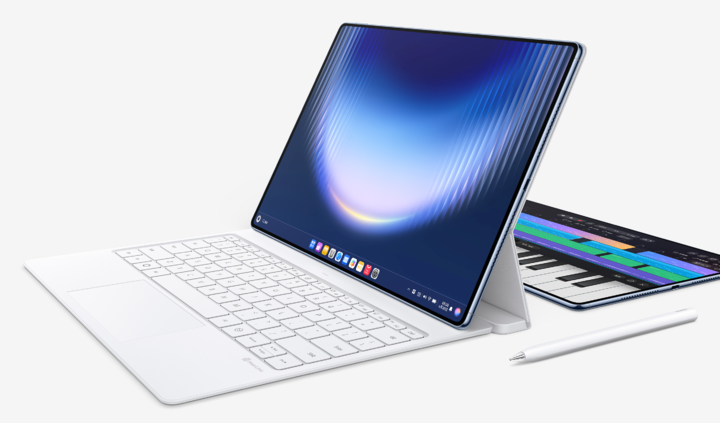
This device, already positioned as the flagship of Huawei's tablet lineup for 2026, entered the market with a new world record: 4.7mm thick and weighing 499 grams. Among tablets over 13 inches, none are thinner or lighter - even the iPad Pro 13-inch model is 0.4mm thicker and 80 grams heavier.
Strangely, the overseas version lacked key features. The native HarmonyOS, especially the tablet/PC dual-system functionality, was missing. The international MatePad Pro Max was merely a top-tier Android tablet outside of its hardware.
On May 20, Huawei finally re-released the same device domestically.
The hardware remains unchanged, but the truly compelling features returned: pre-installed HarmonyOS 6.1 - a mature domestic operating system. Beyond being the world's thinnest large-screen tablet, it's now a legitimate "HarmonyOS computer."
The complete form of the MatePad Pro Max has finally arrived in China.
[](https://s3.ifanr.com/wp-content/uploads/2026/05/img_6a0dd60e9f856.png!720)
## Slimming the Tablet First, Then Turning It into a Computer
Huawei's hardware quality never disappoints.
The 4.7mm thickness isn't achieved through component sacrifices - quite the opposite. Huawei pushed its industrial design to new heights:
- The unified cloud-swan architecture integrates the back cover and frame
- Centralized motherboard layout inherited from premium smartphones
- 15% improved overall component density
- 22% thinner PCB via laser etching and embedded packaging
The infamous iPhone 6 "BendGate" incident still haunts ultra-thin devices. Huawei's innovative load-bearing beam and mortise-and-tenon locking structure in high-stress areas boosted bend resistance by 60% for this 13.2-inch tablet.
The 13.2-inch flexible OLED screen - yes, you read that right. Huawei boldly uses flexible panels on non-foldable tablets to push bezel limits to 3.55mm while integrating a capsule-shaped front camera.

The iPad Pro held the "thinnest/lightest" title since 2024, but its 13-inch model never broke the 5mm thickness barrier and weighed nearly 580g. Huawei has now redefined tablet slimness.
But slimness is only half the story. The other half lies in HarmonyOS.
The Kirin T93 Pro chip enables native dual-space functionality: four-finger swipe switches between tablet and PC modes. HarmonyOS 6.1 supports 20 concurrent windows (50 on PC mode) with dual-screen support, powered by hundreds of native PC apps developed with ecosystem partners.

Application closure issues between modes have been resolved - most apps now stay open during mode switches. The 1.8mm travel keyboard completes the PC experience.
This is no longer just a tablet - it's a full-fledged HarmonyOS computer.

## Three Years, Three Homegrown Software Tools
While Apple has "GarageBand," Huawei now introduces its own professional music creation tool "YinYueJia" (Music Home).
Since 2022, Huawei has developed native apps progressively:
- 2022: Notes app
- 2024: Painting app "Born to Draw"
- 2026: Music production software
These three tools aim to transform HarmonyOS devices from consumption/office tools into genuine creative platforms for new generation content creators.
You might assume this new music app is just an AI music generator...
"YinYueJia" is a full-featured DAW supporting composition, recording, arrangement, and mixing with 1000-track capability. Its 18ms latency and chip-level acceleration are complemented by AI features like instrument separation for sampling.
The sound library includes 200+ Chinese and Western instruments, including rare traditional Chinese instruments like Tang Dynasty-style lute and konghou recreated through collaboration with Shanghai Conservatory of Music.
While not yet rivaling Logic Pro, its dual interface lowers barriers for beginners. The educational "kid's space" with Xueersi content and system-level isolation shows family-oriented design.
Huawei also added native HarmonyOS development tools like DevEco Studio to the tablet, making it a full software development environment.

## The Other Side of Leadership
Huawei leads China's tablet market with 29.2% share in 2025. However, Apple briefly overtook with 26.7% vs Huawei's 24.9% in Q4 2025 (IDC data).
The "Pro Max" suffix borrowed from smartphones and direct iPad Pro competition clearly signal targeting premium markets.
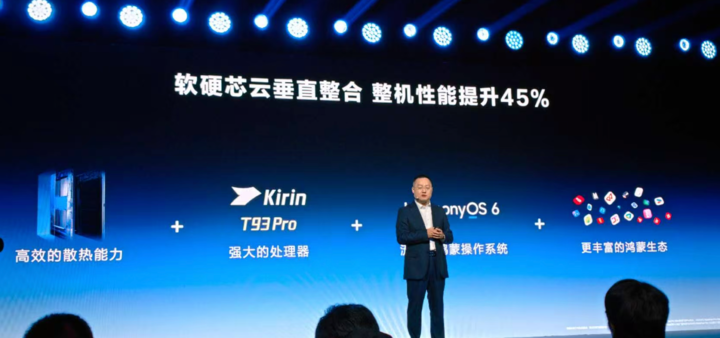
This device sits at an industry inflection point: ARM architecture gains momentum, and tablet/PC boundaries blur. The previous MatePad Pro 13.2 started at ¥5,499 post-subsidy.
The MatePad Pro Max will reveal its pricing during June 1 launch, aiming to redefine premium tablet standards while maintaining market leadership.
